Method 04 · Chicken only
Hainanese Poached Chicken Without Rice
A complete chicken-only plate: gently poach a whole bird, make ginger-scallion sauce while it cooks, then serve the carved chicken with cucumber and hot broth. No rice is needed.
Jump to the cooking steps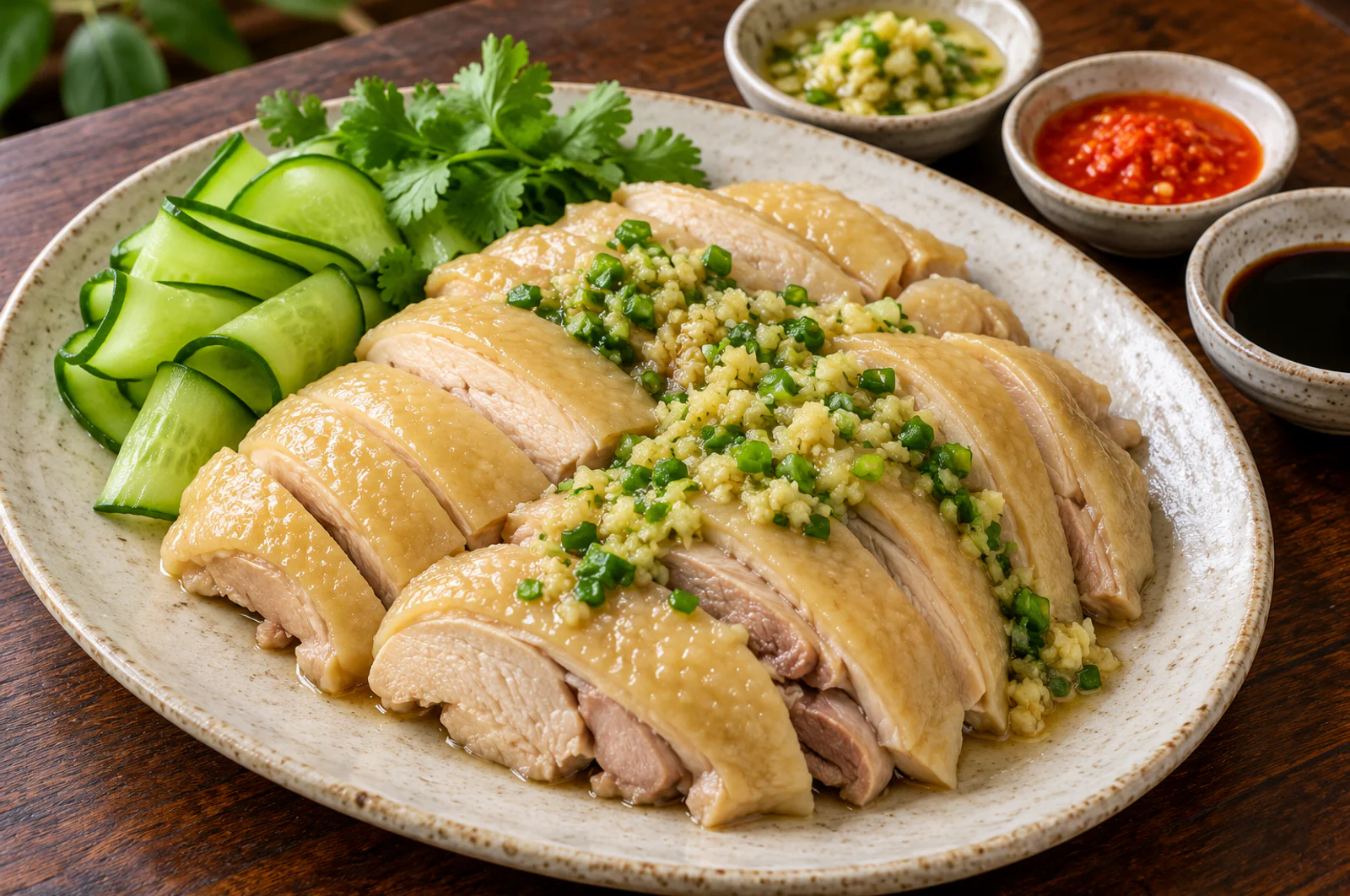
Ingredients for 4 servings
Chicken and broth
- 1 whole chicken, about 1.4–1.7 kg / 3–3¾ lb, unstuffed
- 2 teaspoons fine sea salt, plus more to season the broth
- 50 g fresh ginger, sliced
- 6 scallions, cut into short lengths
- 6 garlic cloves, lightly crushed
- Cool water, enough to submerge the chicken in a close-fitting pot
Ginger-scallion sauce and serving
- 50 g fresh ginger, peeled and finely grated
- 4 scallions, finely sliced
- ½ teaspoon fine sea salt
- 80 ml / ⅓ cup neutral oil
- 1 cucumber, sliced; cilantro to finish, optional
Also have a lidded pot large enough to submerge the bird, a heatproof bowl, a strainer, a clean carving board, and an instant-read food thermometer ready.
Step-by-step: cook the chicken and serve
Follow these eight steps in order. The thermometer—not the clock or the color of the juices—decides when the whole chicken is cooked.
Prepare the chicken and aromatics
Pat the chicken dry; do not wash it. Rub the 2 teaspoons of salt over the skin. Slice the ginger, cut the scallions, and crush the garlic. Keep the cucumber and other ready-to-eat ingredients away from the raw chicken and its board.
Put everything in the pot
Set the unstuffed chicken in a close-fitting pot. Add the sliced ginger, scallions, and garlic around it, then pour in enough cool water to submerge the bird. Use a larger pot if any part remains above the water.
Bring to a quiet simmer
Bring the water just to a boil over medium-high heat. As soon as it boils, lower the heat, cover, and keep only occasional small bubbles rising. If the water starts rolling hard, reduce the heat again.
Make the sauce while the chicken cooks
Combine the grated ginger, sliced scallions, and ½ teaspoon salt in a deep heatproof bowl. Heat the neutral oil until shimmering, not smoking, and carefully pour it over the aromatics. Stir and leave it for 10 minutes. Slice the cucumber on a clean board.
Check the chicken in three places
For a 3–4 lb unstuffed chicken, USDA lists roughly 60–75 minutes of simmering as a planning estimate. Begin checking near the lower end: insert a food thermometer into the thickest breast, the innermost thigh, and the innermost wing without touching bone. Every place must read at least 165°F / 74°C. If any reading is lower, keep simmering and check again; do not rely on resting to finish cooking it.
Lift out and rest
Transfer the fully cooked chicken to a clean tray or board. Let it rest for 15 minutes before carving. Keep the poaching liquid in the pot for the broth.
Finish the broth and carve
Strain the poaching liquid into a clean pot, bring it back to a boil, then taste and season lightly with salt. Cut the rested chicken into serving pieces with a clean knife.
Plate without rice
Arrange the chicken with sliced cucumber and optional cilantro. Spoon some ginger-scallion sauce over the chicken and put the rest on the table. Serve the hot broth in small bowls alongside.
Cooking-time and thermometer guidance: USDA, Chicken from Farm to Table. Raw-chicken handling and leftover guidance: CDC, Chicken and Food Poisoning. The ginger-scallion sauce quantities match our three-sauce guide.
Want the other two sauces?
The ginger-scallion sauce above completes this plate. For a hotter dip, make the chile-garlic sauce; for a sweeter, darker accent, make the dark soy sauce. Both have measured ingredients and directions in the three-sauce guide.
Serving and leftovers
Serve the chicken, cucumber, sauce, and broth together while warm. For a different plate without rice, add blanched greens or lettuce cups. Refrigerate leftover chicken within 2 hours, or within 1 hour if it has been exposed to temperatures above 90°F / about 32°C.
Leftover timing: CDC chicken food-safety guidance.