Component guide · Chicken
How to Poach Chicken Gently and Safely
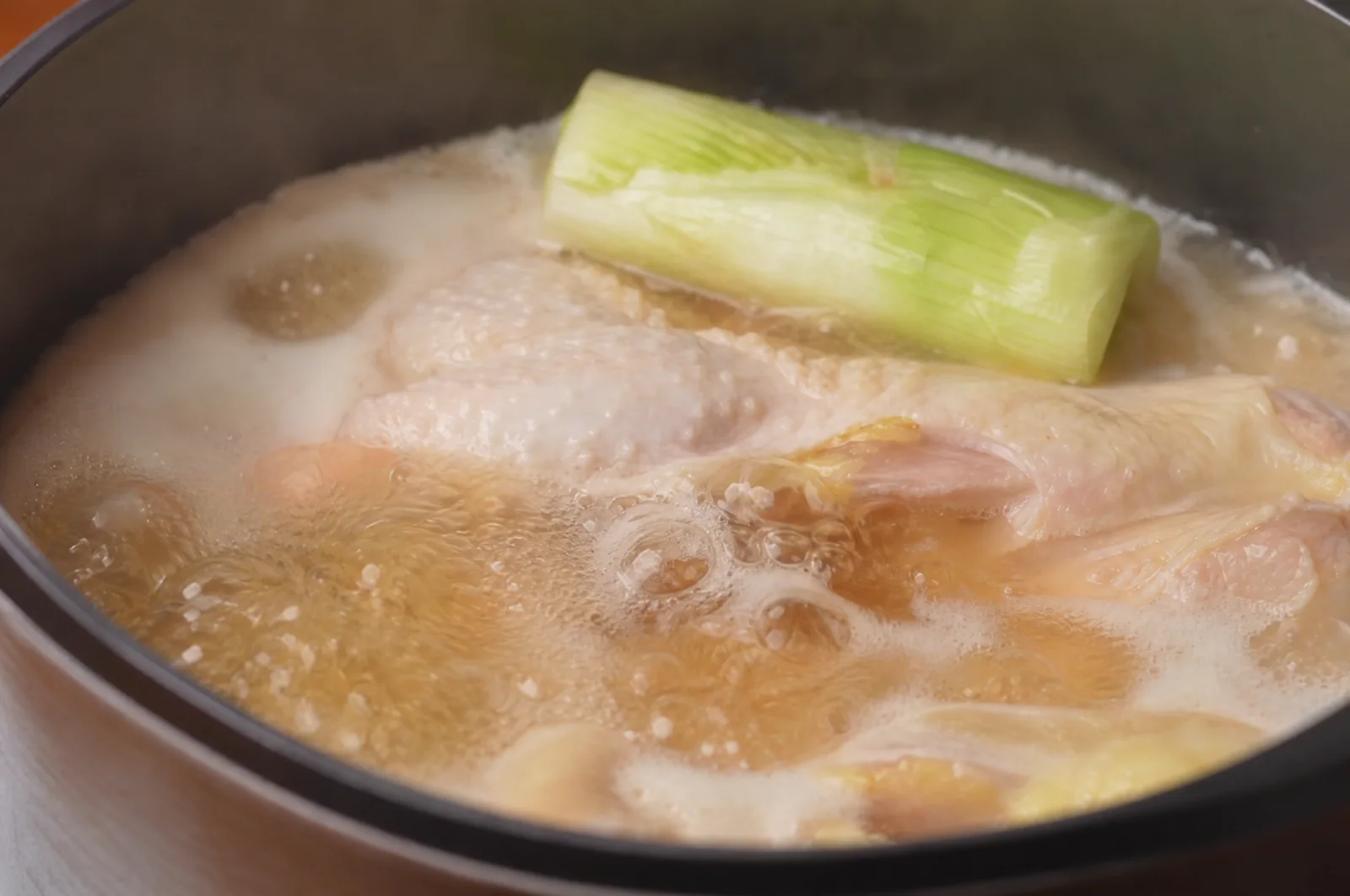
The goal is tender meat and intact skin, not a rolling boil. Chicken size, pot shape, and heat level change the timing, so use a thermometer to decide when the bird is done.
The non-negotiable safety check
Verify 165°F / 74°C
USDA guidance sets this safe minimum for all poultry. For a whole bird, check the innermost thigh and wing and the thickest part of the breast, with the probe away from bone.
Color, juice clarity, and elapsed time are not substitutes for a food thermometer. Do not wash raw chicken; splashing water can spread contamination around the kitchen.
Sources: USDA safe temperature chart, USDA food thermometer guidance, and CDC raw-chicken guidance.
The poaching sequence
- Season Salt the chicken and fill the cavity with ginger and scallions
- Submerge Use a close-fitting pot and enough cool water to cover
- Heat Bring just to a boil, then reduce immediately to a quiet simmer
- Check Measure the breast, inner thigh, and inner wing away from bone
- Rest Drain and rest the bird for 15 minutes before carving
- Reserve Strain the broth for fragrant rice and soup
Tradition is not one frozen technique
Singapore heritage material distinguishes an older Hainanese room-temperature-water treatment from the ice-water technique associated with Cantonese influence. Both appear in modern cooking; an ice bath can tighten the skin, but it is not the only way to finish the bird.