Method 03 · Electric pressure cooker
Instant Pot Hainanese Chicken Rice
An electric pressure cooker can turn chicken thighs and fragrant rice into a mostly hands-off meal. The important details are keeping enough thin liquid for the cooker, avoiding an overfilled pot, and checking the chicken after pressure releases.
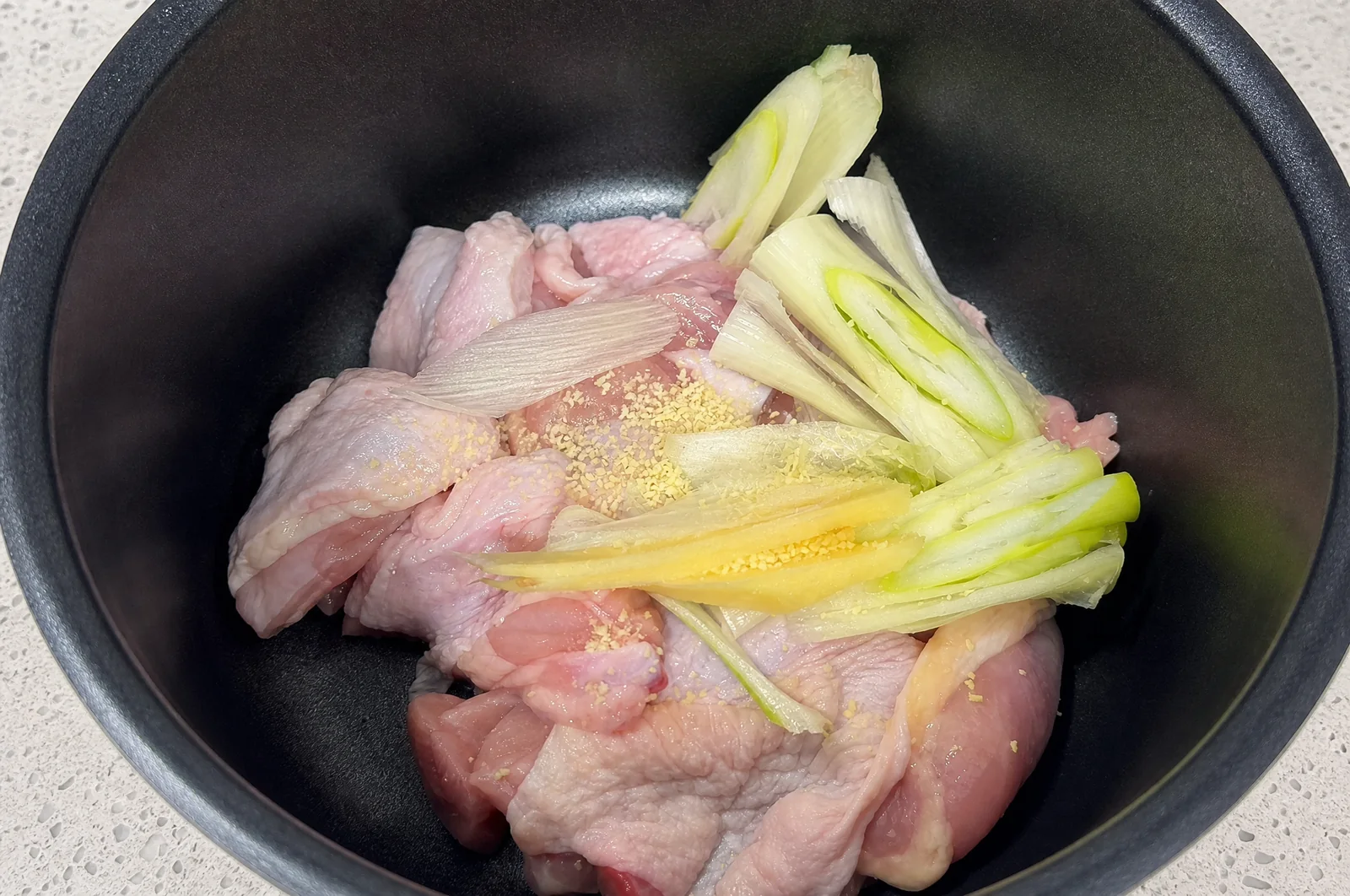
Ingredients for a 6-quart cooker
- 4 bone-in, skin-on chicken thighs, about 700–900 g / 1½–2 lb total
- 1 teaspoon fine sea salt
- 300 g / 1½ cups jasmine rice, rinsed and very well drained
- 300 ml / 1¼ cups low-sodium chicken broth, or your model’s required minimum
- 1 tablespoon chicken fat or neutral oil
- 25 g fresh ginger, minced
- 4 garlic cloves, minced
- 3 scallions, white and green parts separated
- 2 pandan leaves, optional
Pressure-cooker method
- Pat the thighs dry and season with salt. Use Sauté to warm the fat, then cook ginger, garlic, and scallion whites for about 1 minute. Cancel Sauté.
- Add broth and scrape the bottom completely clean. Stir in drained rice, level it gently, and add pandan.
- Arrange thighs in a single layer over the rice. Lock the lid and follow your model’s instructions for sealing and minimum liquid.
- For a common 6-quart electric cooker, cook on High Pressure for 6 minutes, then allow 10 minutes of natural release before carefully releasing the remaining pressure.
- Open the lid only after the cooker indicates it is safe. Check each thigh at its thickest point, avoiding bone; it must reach 165°F / 74°C.
- Transfer the chicken to a board. Cover the rice for 5–10 minutes, then fluff. Slice the chicken and serve with cucumber and sauces.
Your appliance manual comes first
Pressure-cooker models differ. Follow the manufacturer’s minimum-liquid, maximum-fill, sealing, venting, and release instructions. If the chicken is below 165°F / 74°C, finish it with Sauté or another controlled heat source before serving.
Avoid the burn warning
- Deglaze the pot thoroughly after sautéing aromatics.
- Use thin broth, not a thick sauce, as the pressure liquid.
- Do not stir dark soy, sugary sauce, or chile paste into the bottom layer.
- Rinse and drain the rice, then spread it evenly rather than packing it down.
Finish it like Hainanese chicken rice
Pressure cooking is only the equipment shortcut. Keep the complete flavor structure: aromatic rice, cucumber, a light broth if desired, and separate bowls of ginger-scallion, chile-garlic, and dark soy sauce.